What is a business website? A guide for small businesses
22 May 2026 · 3 min read
What is a business website? A guide for small businesses
Many small business owners assume a social media profile or a listing on a directory is enough to compete online. It is not. Understanding what is a business website, and why it matters, is one of the most practical decisions you can make for your business. A website gives you a permanent, professional home on the internet that you control entirely. It builds credibility, attracts customers around the clock, and supports every stage of your sales process. This guide covers the definition, features, importance, and first steps to create one.
Table of Contents
Key takeaways
| Point | Details |
|---|---|
| A website is three things | Every business website needs a domain name, web hosting, and content to function properly. |
| Intent separates business sites | A business website is built to engage customers and support services or sales, not just share information. |
| Credibility is at stake | Most customers expect a business to have a website; without one, you risk losing trust before a conversation starts. |
| Website type matters | Choosing the right category (brochure, ecommerce, landing page) aligns your site with your actual business goals. |
| Maintenance is non-negotiable | A website is a business asset that requires regular updates to remain effective and visible in search results. |
What is a business website, exactly?
A business website is a collection of interconnected web pages that sit under a single domain name and are accessible over the internet. The Oxford definition describes a website as “a set of pages on the internet” where companies put information. That is the foundation, but a business website goes further than that.
What separates a business website from a personal blog or a hobby site is intent. ZenBusiness defines websites as platforms for companies to promote and interact with clients. The practical difference is that a business website is built to do something: generate enquiries, sell products, showcase services, or build trust with potential customers.
Think of it this way. Your domain name is your address. Your web hosting is the building that sits on that address. Your website content and pages are everything inside the building. These three components must all work together for the site to function reliably.
The core components of a business website include:
-
Domain name. Your unique web address (for example, yourbusiness.co.uk). It is how customers find you online.
-
Web hosting. A server that stores your website files and delivers them to visitors when they type in your address.
-
Website pages and content. The actual text, images, and files that make up what visitors see and read.
-
A homepage. The first page most visitors land on, which sets the tone for your brand.
-
Navigation. The menu structure that helps visitors move between pages without getting lost.
A single web page is not a website. A website is the full collection, all connected, all serving a shared purpose.
Features and functions of a business website
Once you understand the structure, the next question is what a business website actually does. GoDaddy highlights that websites are versatile business platforms that go well beyond passive information sharing. A well-built site can display information, sell products, capture leads, and handle customer queries without you lifting a finger.
Here are the key features you will find on most effective business websites:
-
Service or product pages. These explain what you offer in enough detail for a visitor to decide whether to contact you.
-
Contact forms. A simple way for customers to get in touch without needing to pick up the phone.
-
Calls to action. Buttons or prompts that guide visitors towards a specific step, such as “Get a free quote” or “Book a consultation.”
-
About page. Builds trust by telling visitors who you are, your experience, and why you are the right choice.
-
Testimonials and reviews. Social proof that reassures new visitors based on the experiences of existing customers.
-
Mobile optimisation. Over half of all web traffic now comes from mobile devices, so your site must work well on a phone screen.
Different business goals call for different website structures. An electrician looking to generate local enquiries needs a different layout and content focus than a retailer selling products online. Successful business websites align their structure and calls to action with primary goals such as credibility, lead generation, or direct sales.
Pro Tip: Before you build anything, write down the one action you most want a visitor to take on your website. Every page, every button, and every piece of content should support that single goal.
Why having a business website matters
Here is the uncomfortable truth: if a potential customer searches for your service and cannot find you online, they will find your competitor instead. SCORE emphasises that most customers expect businesses to have an online presence, and a lack of website often results in lost trust and missed opportunities.
The importance of business websites for small businesses comes down to several clear advantages:
-
Credibility. A professional website signals that you are a legitimate, established business. Without one, customers question whether you are serious.
-
Search engine visibility. Having a professional website helps small businesses appear in Google searches, which directly increases the number of people who discover you.
-
Wider reach. Your physical location limits how many people you can serve in person. A website removes that limit entirely.
-
Customer convenience. People want to research businesses at 10pm on a Tuesday. Your website works when you are not.
-
Brand control. A website is the one place online where you control every word, image, and message about your business.
-
Digital brochure. SCORE describes websites as the welcome mat and digital introduction to a business. It is often the first impression you make.
-
Competitive necessity. Your competitors have websites. Customers compare businesses online before they make contact. Not showing up means not being considered.
Consider a local plumber who relies entirely on word of mouth. They may do excellent work, but when a new homeowner moves into the area and searches “emergency plumber near me,” that plumber is invisible. A well-structured website with clear service pages and a contact form would capture that enquiry automatically.
How to create a business website: first steps
Creating a business website does not have to be complicated, but it does require clear thinking before you start clicking buttons. Here is a practical sequence to follow:
-
Define your website’s purpose. Decide whether your primary goal is generating enquiries, selling products, or building brand awareness. This decision shapes every other choice you make.
-
Choose and register a domain name. Pick something short, memorable, and close to your business name. A .co.uk domain signals a UK-based business to local customers.
-
Select a hosting provider. Domain name registration and hosting are foundational decisions that directly affect your site’s reliability and how quickly it loads. Cheap hosting often means slow load times and poor uptime.
-
Plan your essential pages. At minimum, you need a homepage, a services or products page, an about page, and a contact page. Add more as your business grows.
-
Consider design and user experience. Your site needs to be easy to navigate, visually consistent with your brand, and readable on any device.
-
Decide between DIY tools and professional help. Platforms like WordPress or Squarespace let you build a site yourself. Professional web designers cost more upfront but typically produce better results and save significant time.
-
Plan for ongoing maintenance. Entrepreneurs should consider user experience, content clarity, and ongoing maintenance to turn a website into a genuine business asset. A site that is never updated becomes outdated quickly.
Pro Tip: Register your domain name separately from your hosting provider. This gives you full control and makes it easier to switch hosts in the future without losing your web address.
Business website categories compared
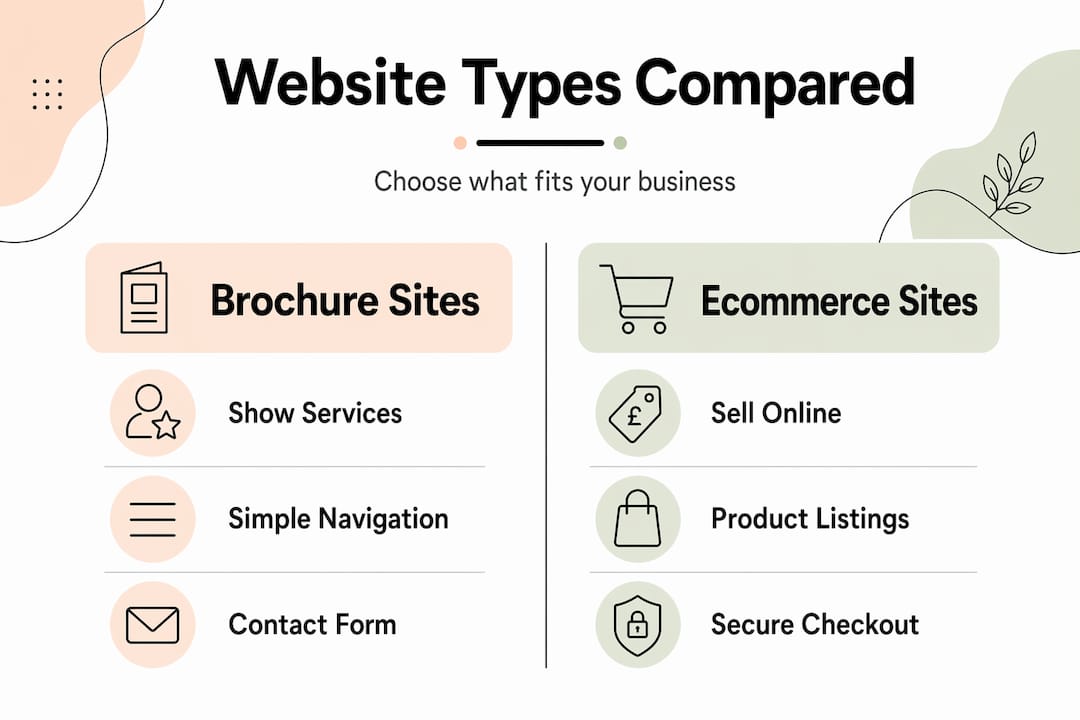
Not all business websites are the same. Choosing the right website category matters for strategic alignment with your business goals. Here is a comparison of the most common types:
| Type | Purpose | Best suited for | Typical features |
|---|---|---|---|
| Brochure website | Showcase services and build credibility | Trades, consultants, local services | Service pages, about page, contact form |
| Ecommerce website | Sell products directly online | Retailers, product-based businesses | Product listings, shopping cart, payment gateway |
| Landing page | Capture leads for a specific offer | Campaigns, single-service businesses | One page, strong call to action, enquiry form |
| Portfolio website | Display past work and attract clients | Designers, photographers, creatives | Project gallery, client testimonials, contact details |
Most small service businesses start with a brochure-style website and expand from there. As your business grows, you might add a blog for SEO, booking functionality, or even an ecommerce section. The key is to match the site type to where your business is now, not where you hope it might be in five years.
My take on what most small businesses get wrong
I have seen hundreds of small business websites, and the pattern is consistent. The business owner gets excited about the design, spends time picking colours and fonts, and then launches a site with no clear calls to action, no thought given to how Google will find it, and hosting that goes down twice a month.
Having a website is not the same as having a working website. A site that looks good but loads slowly, has no contact form, and has not been updated in two years is not a business asset. It is a liability. It tells visitors that the business is not paying attention.
The businesses I see getting real results from their websites treat them the way they treat their tools or their vehicles. They invest in them, maintain them, and expect them to perform. They think about what a visitor needs to see in the first ten seconds to decide to get in touch.
One thing I would push back on: the idea that a small business cannot afford a good website. The real cost is not having one. A single missed enquiry per week, at an average job value of £500, is £26,000 a year in lost revenue. That reframes the conversation entirely.
— Ben
Build a website that works for your business
If you have read this far, you already understand more about business websites than most small business owners who launch one without thinking it through.

At gtwelve, we build websites specifically for UK service businesses and trades. We combine professional design with technical SEO, clear calls to action, and workflow connections so that enquiries do not just arrive, they get handled. Whether you need a professional service website or a full growth system that connects your site to your calendar, quotes, and follow-ups, we can help. Visit gtwelve to see what a conversion-focused website looks like in practice and to get in touch with our team.
FAQ
What is the definition of a business website?
A business website is a collection of web pages under a single domain name, built with the intent to promote services or products, engage customers, and support business goals such as lead generation or sales.
What are the key features of a business website?
The core features include a homepage, service or product pages, a contact form, clear calls to action, an about page, and mobile-friendly design. These elements work together to build trust and convert visitors into enquiries.
Why is having a business website important?
A website builds credibility, improves your visibility in search engines, and allows customers to find and contact you at any time. Without one, you are likely losing enquiries to competitors who do have an online presence.
What are the main business website categories?
The main categories are brochure websites, ecommerce websites, landing pages, and portfolio websites. Each serves a different purpose, and choosing the right type depends on your business model and primary goals.
How do I start creating a business website?
Begin by defining your website’s purpose, then register a domain name, choose reliable hosting, and plan your essential pages. Decide whether to use a DIY platform or hire a professional based on your budget and the level of quality you need.
Recommended
If this sounds like your website, we can take a look.
Note 69 of 72