Why SMEs need professional websites in 2026
27 May 2026 · 3 min read
Why SMEs need professional websites in 2026
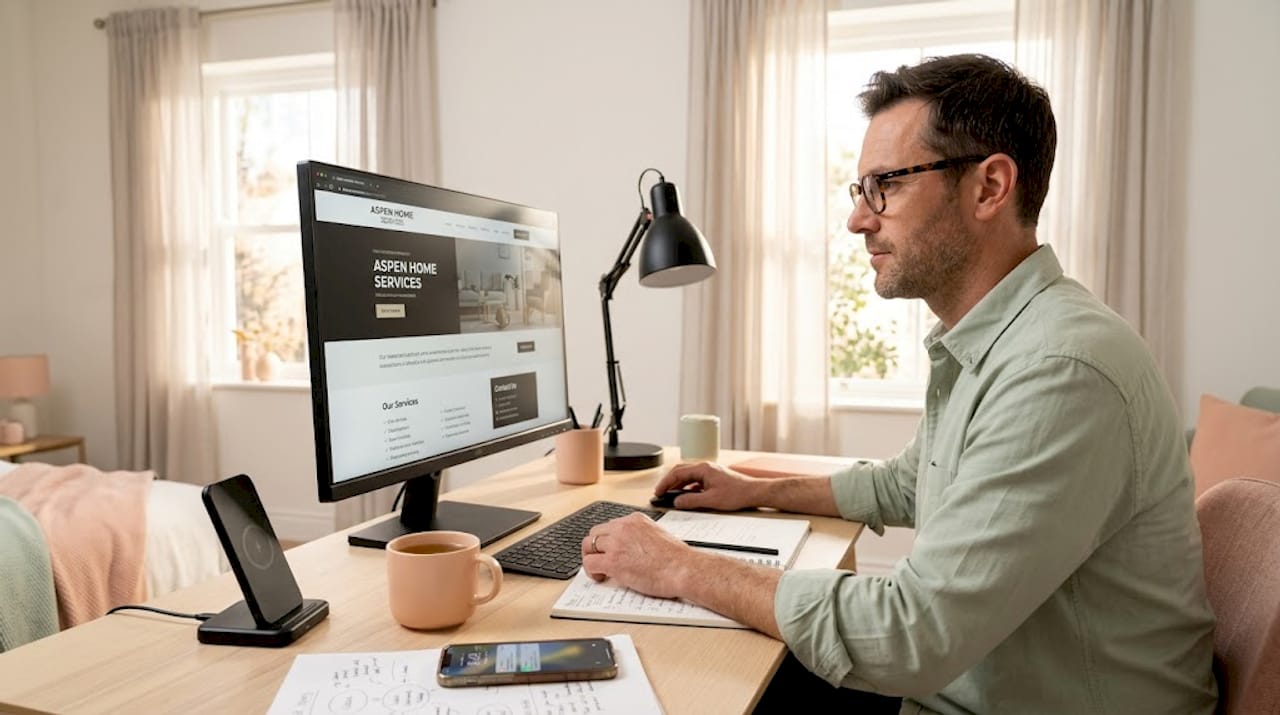
Running a business without a professional website in 2026 is a gamble most UK SMEs cannot afford to take. While many small businesses rely heavily on social media profiles to establish their online presence, this approach has significant gaps in credibility, control, and lead generation. Understanding why SMEs need professional websites goes beyond having a digital address. It’s about owning your presence, converting visitors into customers, and building something that works for your business around the clock.
Table of Contents
- Key takeaways
- Why SMEs need professional websites: credibility and trust
- Lead generation and customer engagement
- Mobile optimisation for UK SMEs
- DIY websites, social media, and professional design compared
- Practical first steps for your professional website
- My honest take on where SMEs go wrong
- How gtwelve helps SMEs build websites that work
- FAQ
Key takeaways
| Point | Details |
|---|---|
| Credibility drives enquiries | A professional website signals legitimacy and helps customers verify your business before making contact. |
| Websites generate leads 24/7 | Purpose-built sites with clear calls to action capture enquiries at any hour, unlike social media posts. |
| Mobile performance is non-negotiable | Google’s mobile-first indexing means a slow or poorly designed mobile site directly harms your search rankings. |
| Social media is not ownership | Platform algorithm changes can destroy your reach overnight; your website is the only digital asset you fully control. |
| Purpose before design | Defining your website’s primary goal before building it is what separates high-performing sites from expensive digital brochures. |
Why SMEs need professional websites: credibility and trust
When a potential customer hears about your business, the first thing most of them will do is search for you online. What they find in those first few seconds shapes whether they pick up the phone or move on to a competitor. A professional website builds trust in ways a Facebook page or Instagram profile simply cannot replicate.
Social profiles can feel transient. They sit on platforms you do not own, and they carry the visual noise of everything around them. A dedicated website, by contrast, gives your business a controlled environment where your brand, your credentials, and your contact details are front and centre without distraction.
The trust signals that matter most to customers include:
- A clear, professional domain name that matches your business name
- Visible contact details including a phone number, email address, and physical location where relevant
- Client testimonials with full names and, ideally, photos or company names
- Consistent branding that matches your other materials
- An SSL certificate (the padlock icon in the browser bar), which signals your site is secure
Pro Tip: Place your phone number and a short contact form above the fold on your homepage. Customers who are ready to enquire should never have to scroll to find how to reach you.
Many customers will not engage with a business that lacks a website at all. They assume it is either very small, unreliable, or has something to hide. For trades, consultants, and local service providers especially, this perception is a real barrier to winning work. The importance of SME websites extends well beyond aesthetics; it is fundamentally about being taken seriously.
Lead generation and customer engagement
There is a meaningful difference between a brochure website and a lead-generating website, and most SMEs have the former when they need the latter. A brochure site tells people what you do. A lead-generating site actively moves people towards contacting you, booking a call, or requesting a quote.
The distinction comes down to design intent. Sites built for specific goals like lead generation or business validation consistently outperform generic sites that try to do everything at once. Here is what separates the two in practice:
-
Clear calls to action on every page. Each page of your site should guide the visitor towards one specific next step. On a service page, that might be “Request a free quote.” On a case study page, it might be “See how we can help your business.” Vague buttons like “Learn more” or “Click here” rarely convert.
-
Contact forms that reduce friction. A form asking for twelve fields of information will be abandoned. Ask for name, email, phone number, and a brief description of the enquiry. That is all you need to start a conversation.
-
Content matched to decision stages. A visitor who has just discovered your business needs different content from someone who is comparing you against two other suppliers. Your website should have pages that serve both. Blog posts and FAQ pages serve early-stage visitors; case studies and testimonials serve those ready to decide.
-
Integration with your business systems. Design tailored for lead generation includes connecting enquiry forms to a CRM, triggering automated follow-up emails, and syncing bookings with your calendar. This removes manual admin and means no enquiry falls through the cracks.
-
24/7 availability. Your website works while you sleep. A well-structured site with a clear enquiry pathway can capture leads at 11pm on a Sunday in a way that no social media post reliably can.
The benefits of professional websites in this area are direct and measurable. More relevant visitors, clearer pathways, and faster follow-up processes translate into more signed contracts.
Mobile optimisation for UK SMEs
This is where a significant number of SME websites quietly lose business every week. Google has used mobile-first indexing since 2019, meaning the mobile version of your website is what determines your position in search results. If your mobile site is slow, cluttered, or difficult to navigate, your rankings suffer regardless of how polished the desktop version looks.
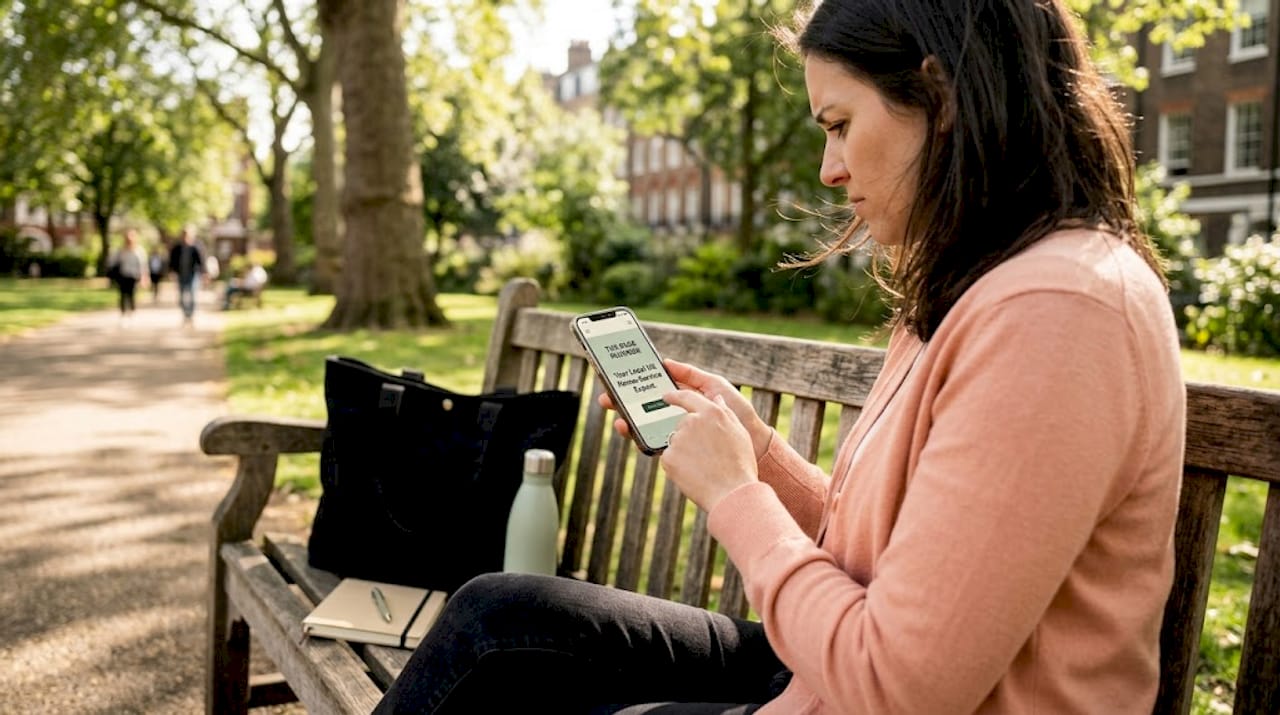
The performance problem runs deeper than most business owners realise. A page that loads in 2 seconds on a fast connection can take 6 to 7 seconds on a patchy 3G or 4G signal. Many of your customers will be on their phones in a van, a waiting room, or between meetings. That delay costs you enquiries.
| Metric | Poor performance | Good performance |
|---|---|---|
| Mobile load time | 6+ seconds | Under 2.5 seconds |
| Core Web Vitals score | Failing | Passing |
| Navigation placement | Top-corner hamburger menu | Thumb-zone bottom bar |
| Intrusive pop-ups | Present on entry | Absent or delayed |
Beyond speed, mobile navigation design directly affects whether visitors stay or leave. The traditional hamburger menu tucked into the top corner of the screen is hard to reach with one hand. Placing key navigation options within the natural thumb zone at the bottom of the screen reduces friction and improves the chance that a visitor moves further into your site.
Pro Tip: Test your website on your own mobile phone using a 4G connection with Wi-Fi turned off. If you find yourself waiting, your customers are doing the same and many will not wait.
UK SMEs often overlook testing site performance in low-quality network conditions, which means they are unaware of conversion losses happening in plain sight. Fixing mobile performance is one of the highest-return improvements most SME websites can make.
DIY websites, social media, and professional design compared
Understanding the trade-offs between your options is worth spending time on before committing to any particular approach.
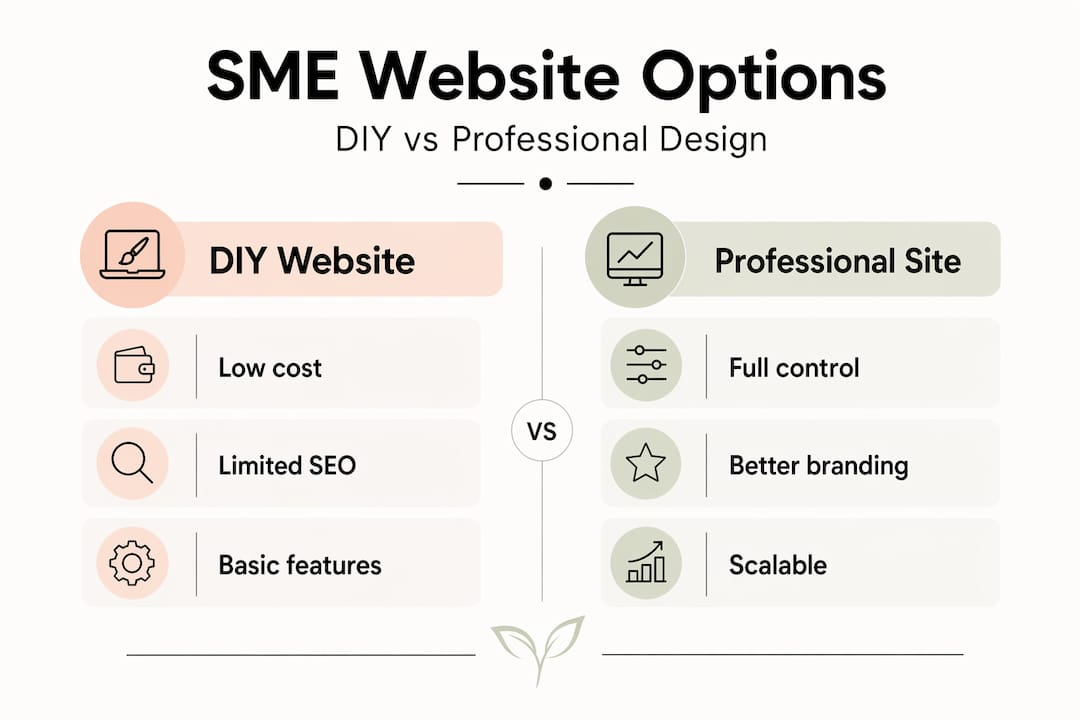
Social media platforms give you a free presence and a built-in audience, but platforms change algorithms unpredictably, which can reduce your reach significantly with no warning and no recourse. You do not own the platform, you cannot control the design, and your business profile sits next to competitors’ adverts. It is a useful supplement, not a foundation.
DIY website builders have improved considerably. AI-powered builders now allow SMEs to create responsive, professional-looking websites without coding knowledge. The limitations show up in scalability, technical SEO, and the ability to integrate with business systems like CRM tools or quote workflows. DIY is a reasonable starting point for very early-stage businesses, but it tends to create a ceiling that businesses quickly outgrow.
| Option | Ownership | SEO control | Lead generation | Scalability |
|---|---|---|---|---|
| Social media only | None | None | Limited | Poor |
| DIY website builder | Partial | Limited | Basic | Moderate |
| Professional website | Full | Full | Advanced | High |
A professionally designed website gives you full ownership of your domain, your content, and your data. You can scale it as your business grows, add service and location pages to capture more search traffic, and connect it to the tools your team already uses. For growing UK service businesses, a strong digital foundation built around an owned website is not optional; it is the infrastructure everything else runs on.
Practical first steps for your professional website
Whether you are starting from scratch or improving an existing site, clarity of purpose is where to begin. Defining your website’s primary goal before building separates sites that generate results from those that simply exist. Ask yourself: is this site primarily for generating enquiries, validating your business to warm referrals, or selling directly? Each goal demands a different structure.
Once that is clear, here is how to move forward practically:
- Choose a platform that you own. WordPress remains the most flexible option for SMEs who want full control, scalability, and access to the growing ecosystem of AI-assisted plugins.
- Plan your pages around customer intent. At minimum: homepage, services page, about page, contact page. Add location or speciality pages as your business grows.
- Sort your domain management. Poor domain management causes website and email outages that damage your credibility with customers. Keep domain renewal dates in your calendar and own your domain directly.
- Write for your customer, not for yourself. Your homepage headline should speak to what the customer gets, not what your company does. “Electrical services you can trust across Manchester” works harder than “Welcome to Smith Electrical Ltd.”
- Build in basic SEO from day one. Page titles, meta descriptions, and structured headings are not optional extras. They determine whether Google can understand and rank your pages.
Pro Tip: If budget is a constraint, prioritise getting the contact and services pages right before anything else. Those two pages are where most enquiries are won or lost.
The impact of a website on SMEs compounds over time. A site built with the right foundations in year one will be easier and cheaper to grow in years two and three than one that was built without a clear plan.
My honest take on where SMEs go wrong
I have worked with a lot of UK service businesses on their websites, and the pattern I see most often is this: a business invests in a new site, it looks great at launch, and then six months later they wonder why it is not generating enquiries.
In my experience, the reason is almost always the same. The website was designed before the purpose was defined. The designer asked “what do you want it to look like?” when the first question should have been “what do you want it to do?” Purpose-driven design, as noted in purpose-led site research, consistently outperforms sites that were built to look impressive rather than perform.
The second thing I have learned is that mobile experience gets deprioritised until it is too late. Business owners tend to review their new sites on a desktop computer in a well-lit office on fast broadband. Their customers are checking them out on a phone while standing in a car park. Those are completely different experiences, and most SMEs do not know there is a gap until their enquiry rate tells them.
Small, targeted improvements, fixing a slow homepage image, moving the contact button, rewriting a service page headline, regularly outperform full redesigns. The businesses I have seen get the most from their websites are those that treat them as ongoing tools rather than one-off projects.
— Ben
How gtwelve helps SMEs build websites that work

If this article has highlighted gaps in your current website, gtwelve can help you close them. We work with UK trades, consultants, and local service businesses to build conversion-focused websites that look professional, load fast on mobile, and are set up to generate real enquiries. Every site we build is connected to practical business systems including quote workflows, automated follow-ups, and calendar integrations, so enquiries do not just land; they move forward. We also cover technical SEO and AI search visibility from the start, not as an afterthought. If you want a website that works as hard as you do, get in touch with gtwelve today.
FAQ
Why do SMEs need a professional website?
A professional website establishes credibility, captures leads around the clock, and gives your business a digital presence you fully own and control. Unlike social media, it is not subject to algorithm changes or platform restrictions.
What makes a website generate leads effectively?
Clear calls to action, fast load times, and trust signals placed near contact points are the key factors. A website designed with a specific lead-generation goal will consistently outperform a generic brochure site.
How does mobile optimisation affect my business?
Google ranks your site based on its mobile version, so poor mobile performance directly reduces your visibility in search results. Slow load times and difficult navigation on phones also cause visitors to leave before making an enquiry.
Is a DIY website builder good enough for an SME?
DIY builders are a reasonable starting point, but they have limitations in SEO control, CRM integration, and scalability. For a growing service business aiming to generate consistent enquiries, a professionally built site typically delivers better long-term results.
Can I rely on social media instead of a website?
Social media is a useful channel, but it should not replace a website. You do not own your social presence, and platform algorithm changes can significantly reduce your reach without warning. Your website is the only digital asset that is entirely yours.
Recommended
If this sounds like your website, we can take a look.
Note 58 of 72